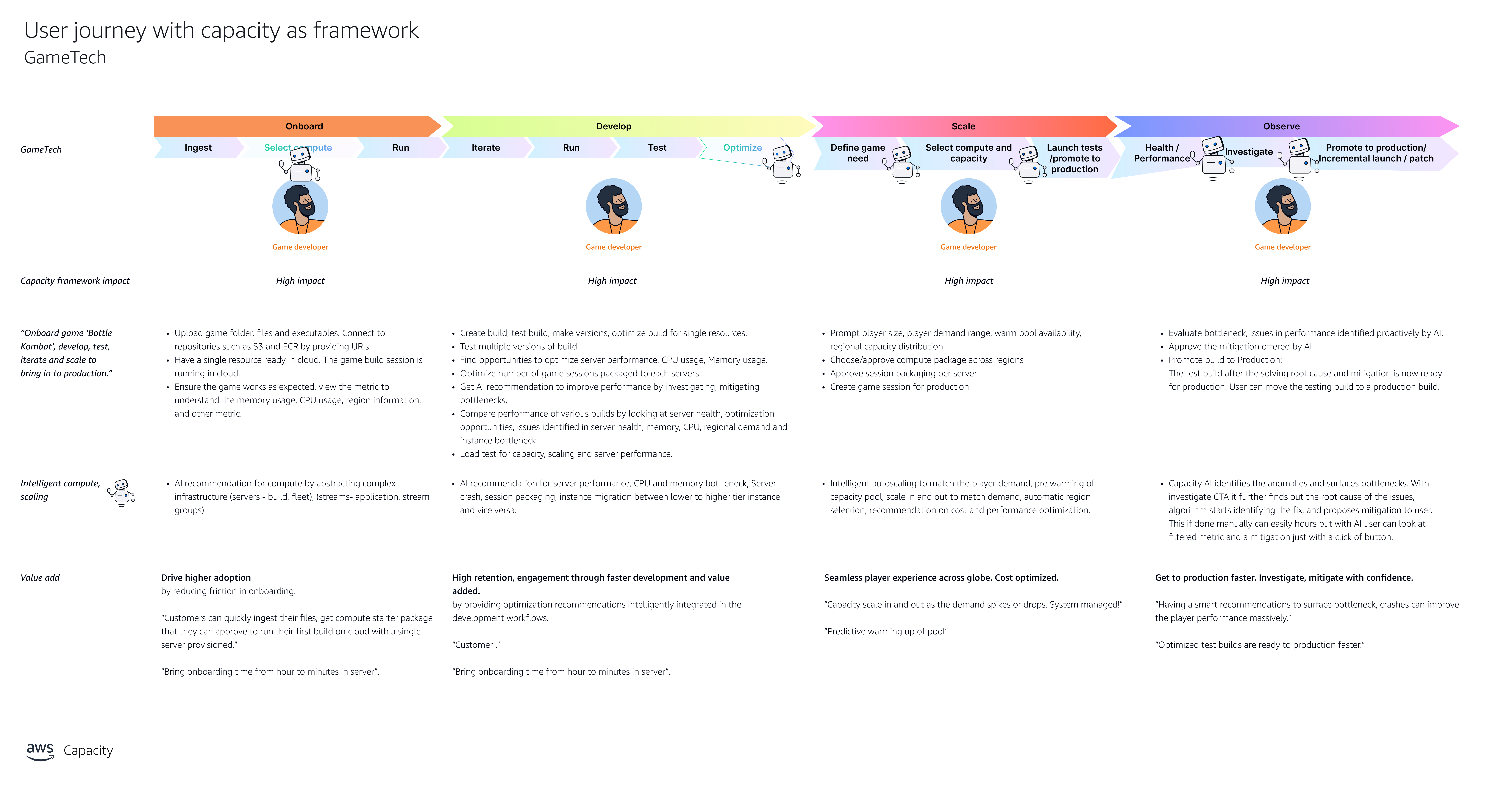
AWS GameLift streams and servers combined capability to build a agentic application for Game Enterprise customers to build server, compute at scale in cloud.
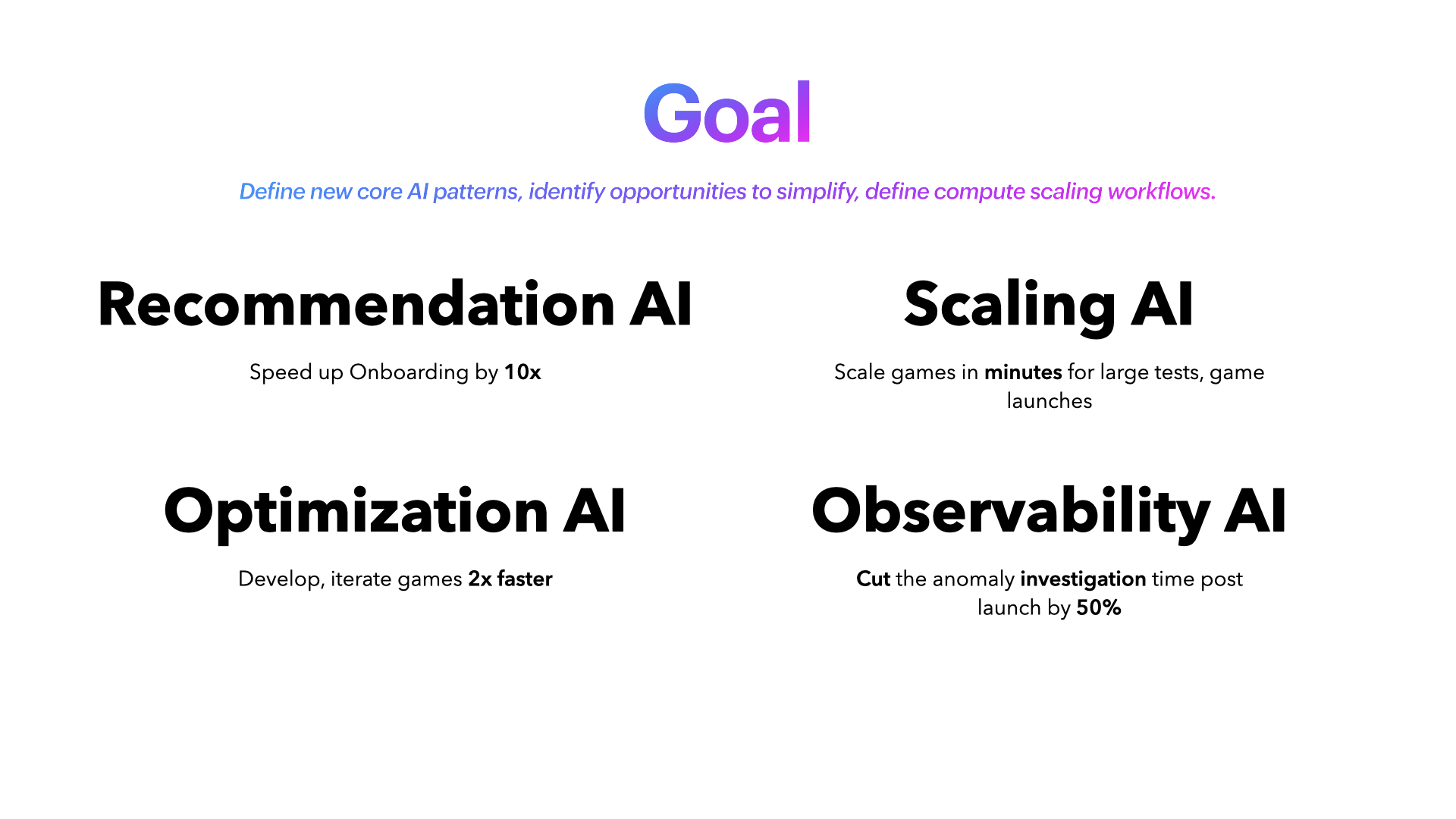
The goal of the project was to allow the Developers to optimize compute for sudden surge in concurrent players, deploy in cloud, scale the compute, visualize the launch day scenarios.
Intelligent scale and optimize workflow
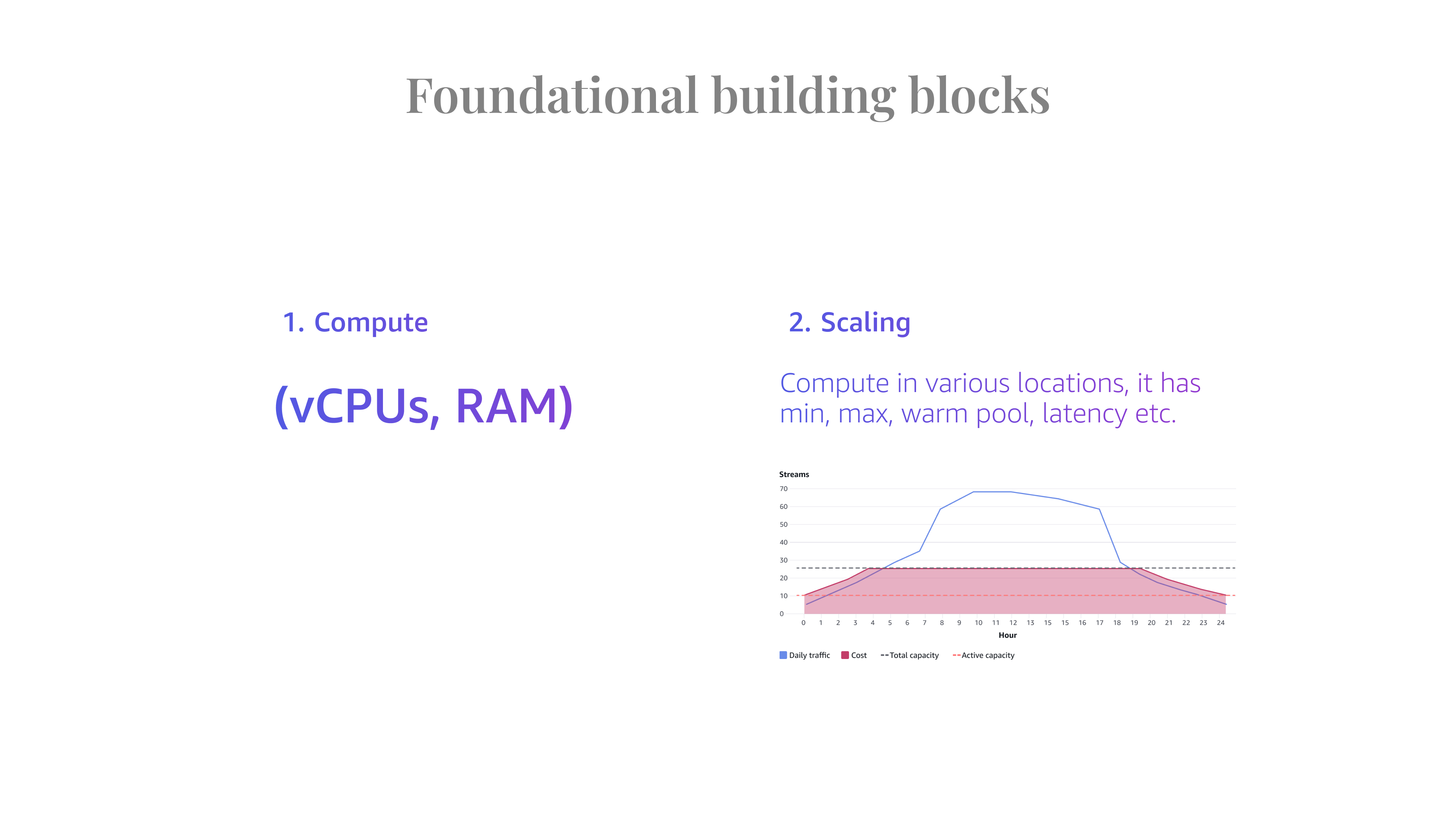
The goal of the project was to enable customers to scale the servers as the concurrent players join a game. The workflow would allow developers to optimize cost, and server performace by optimizing vCPUs.
Scale a game from open beta to launch day. The Problem
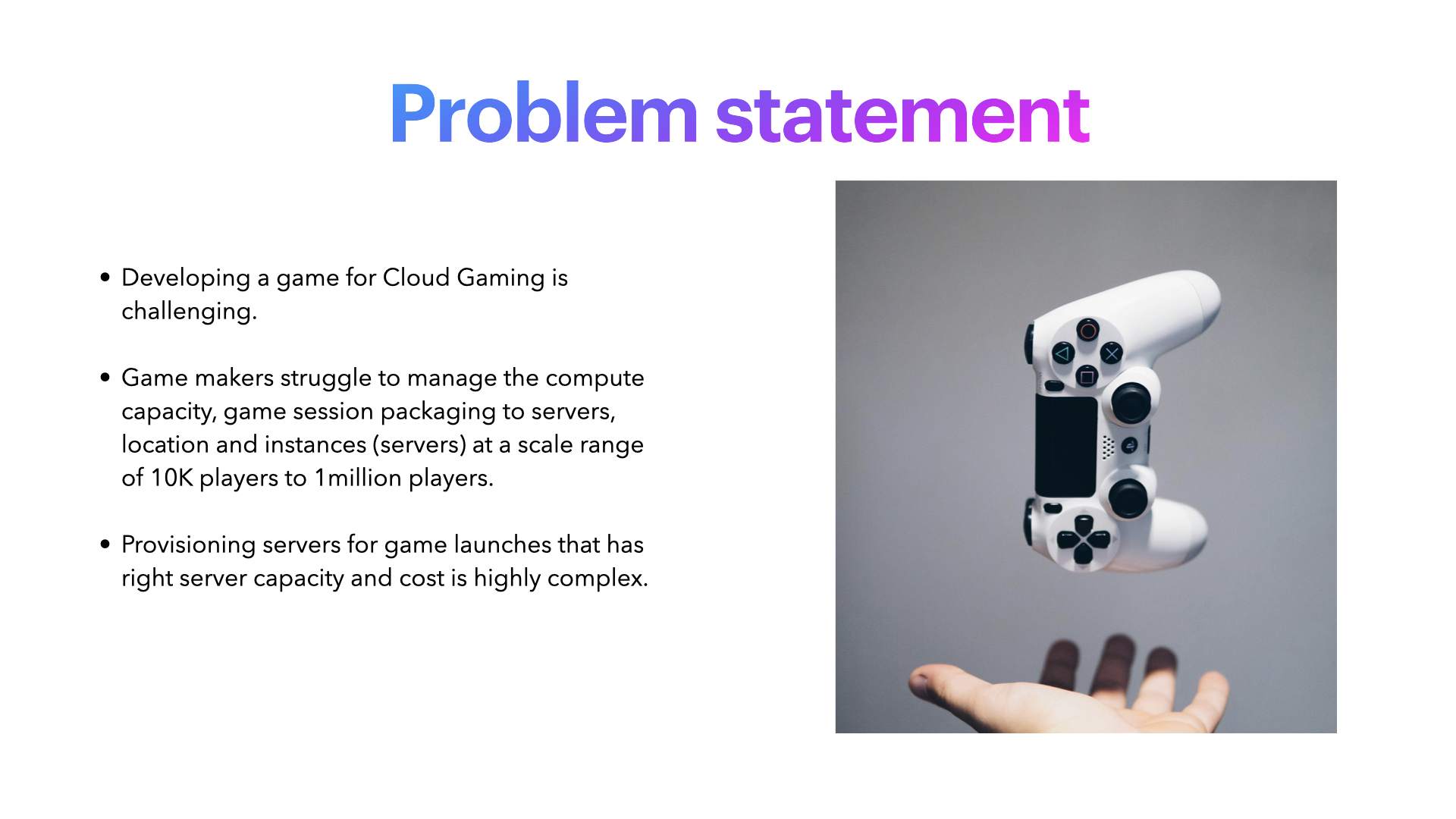
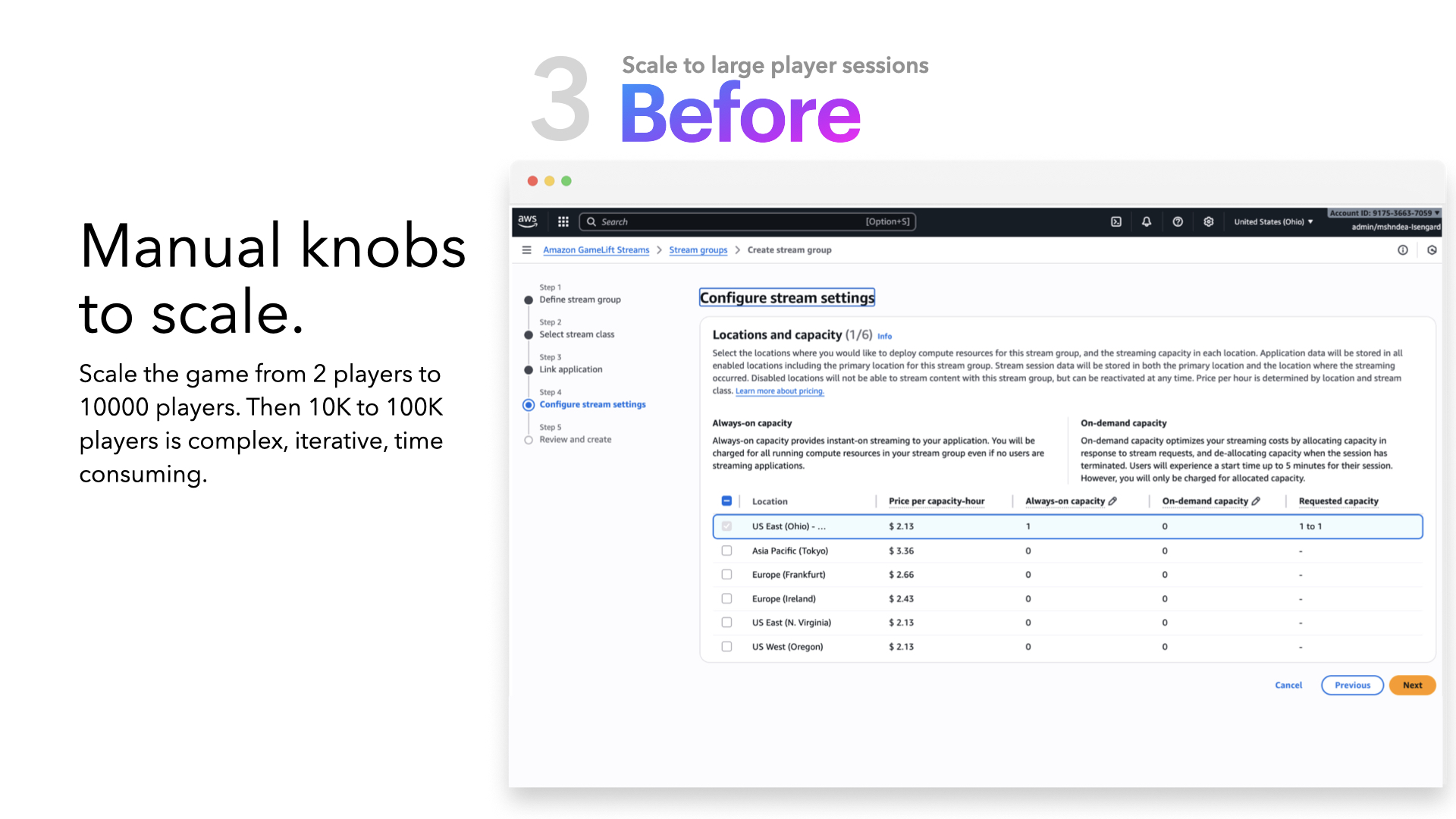
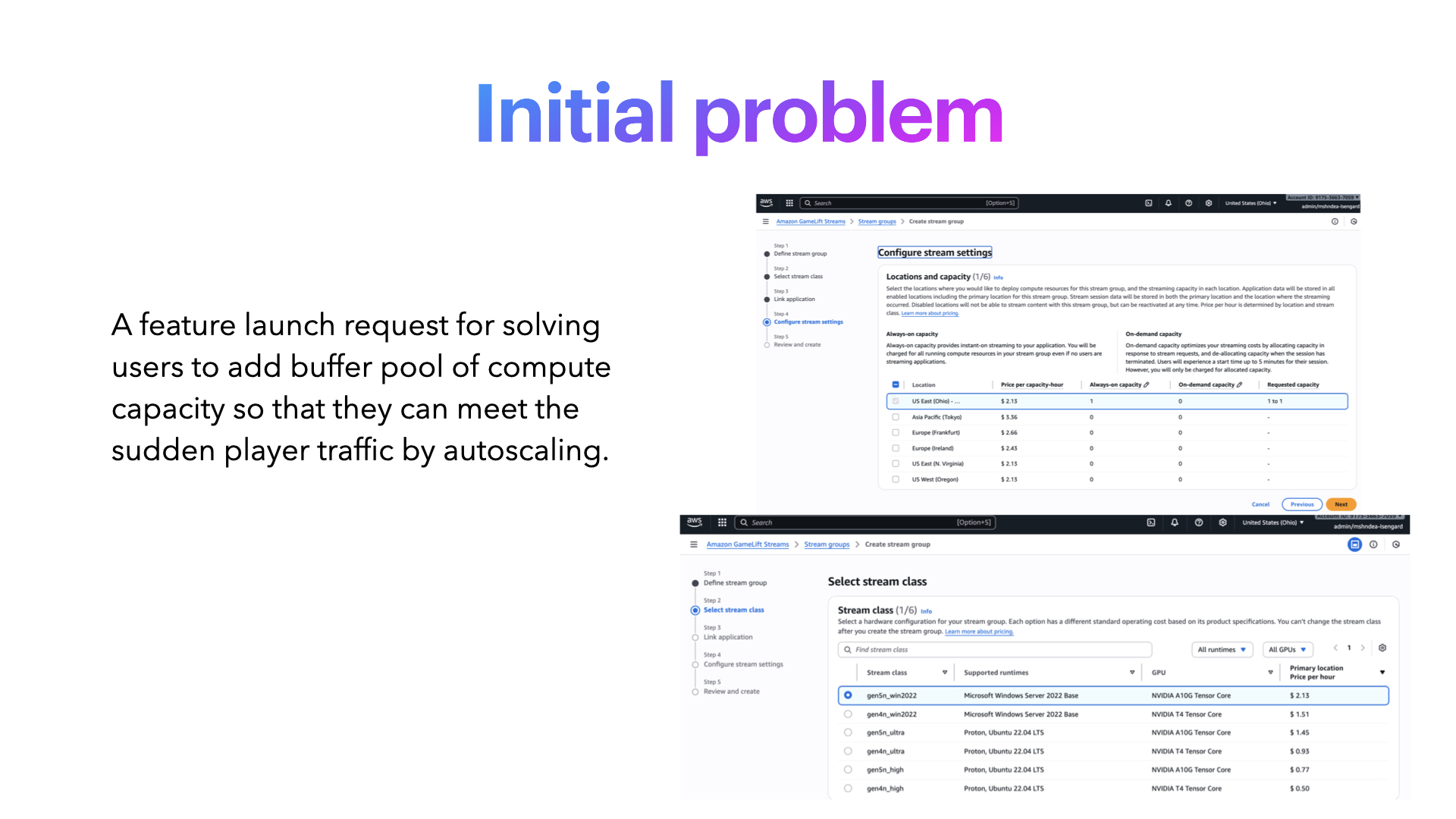
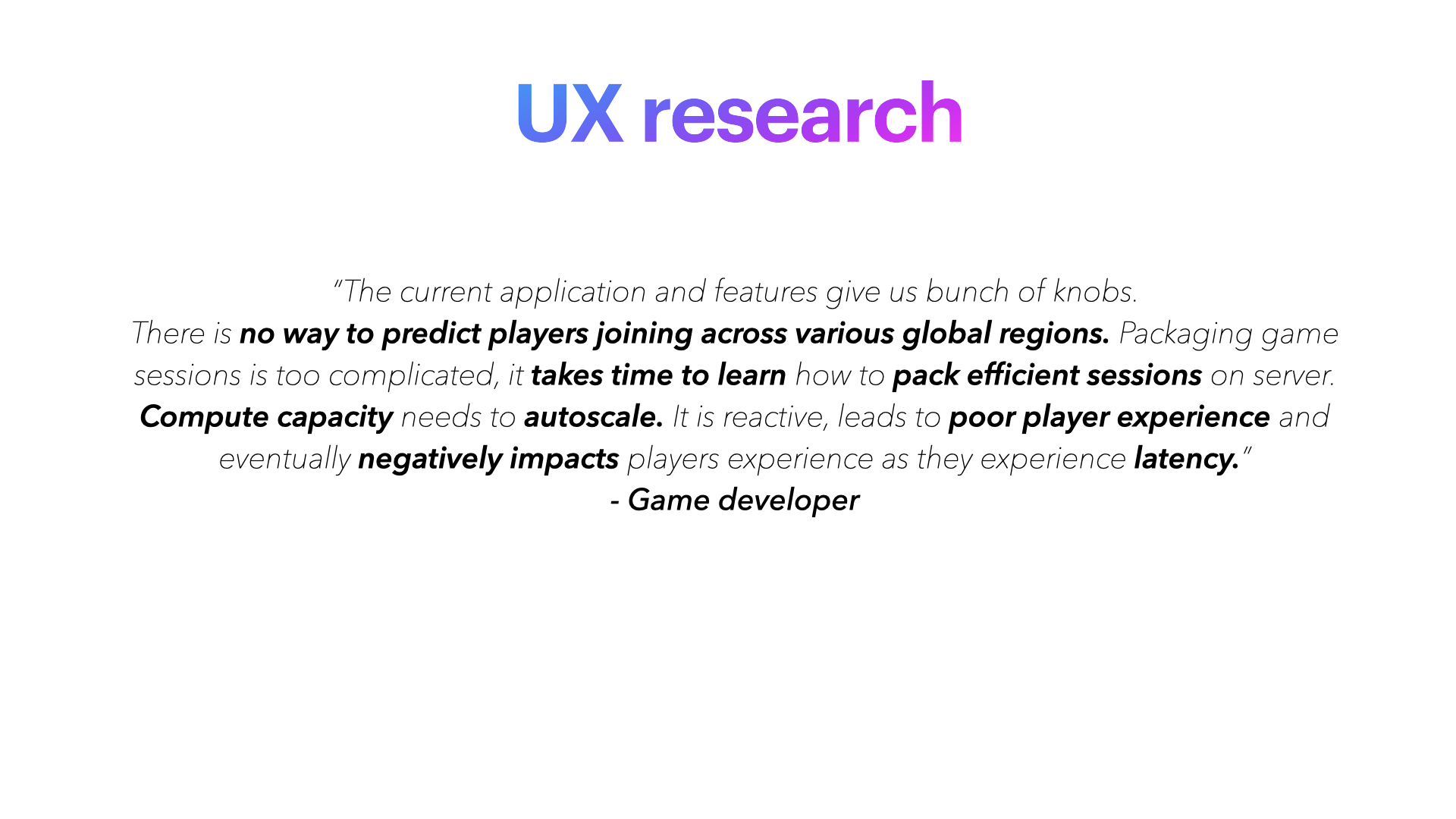
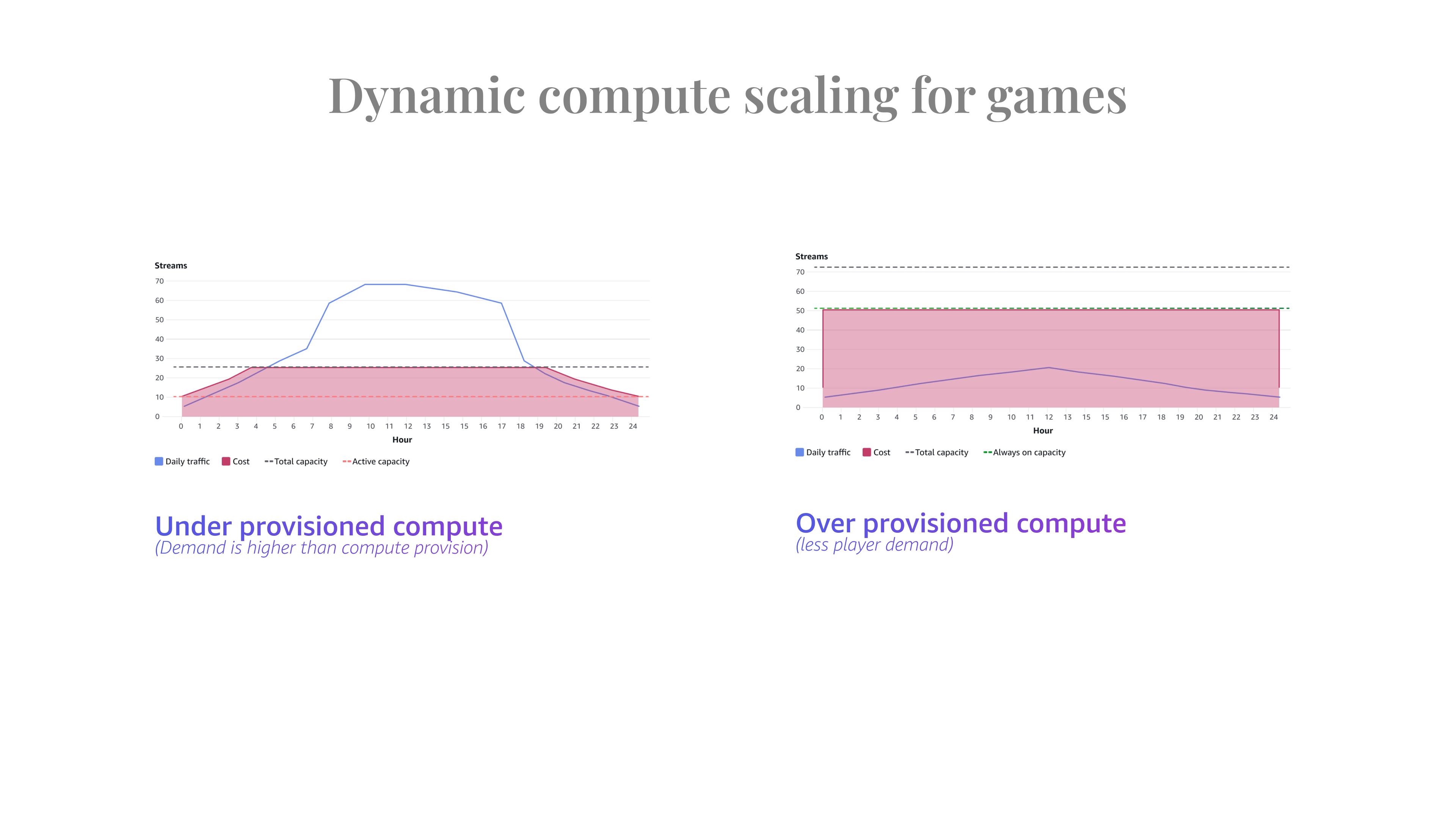
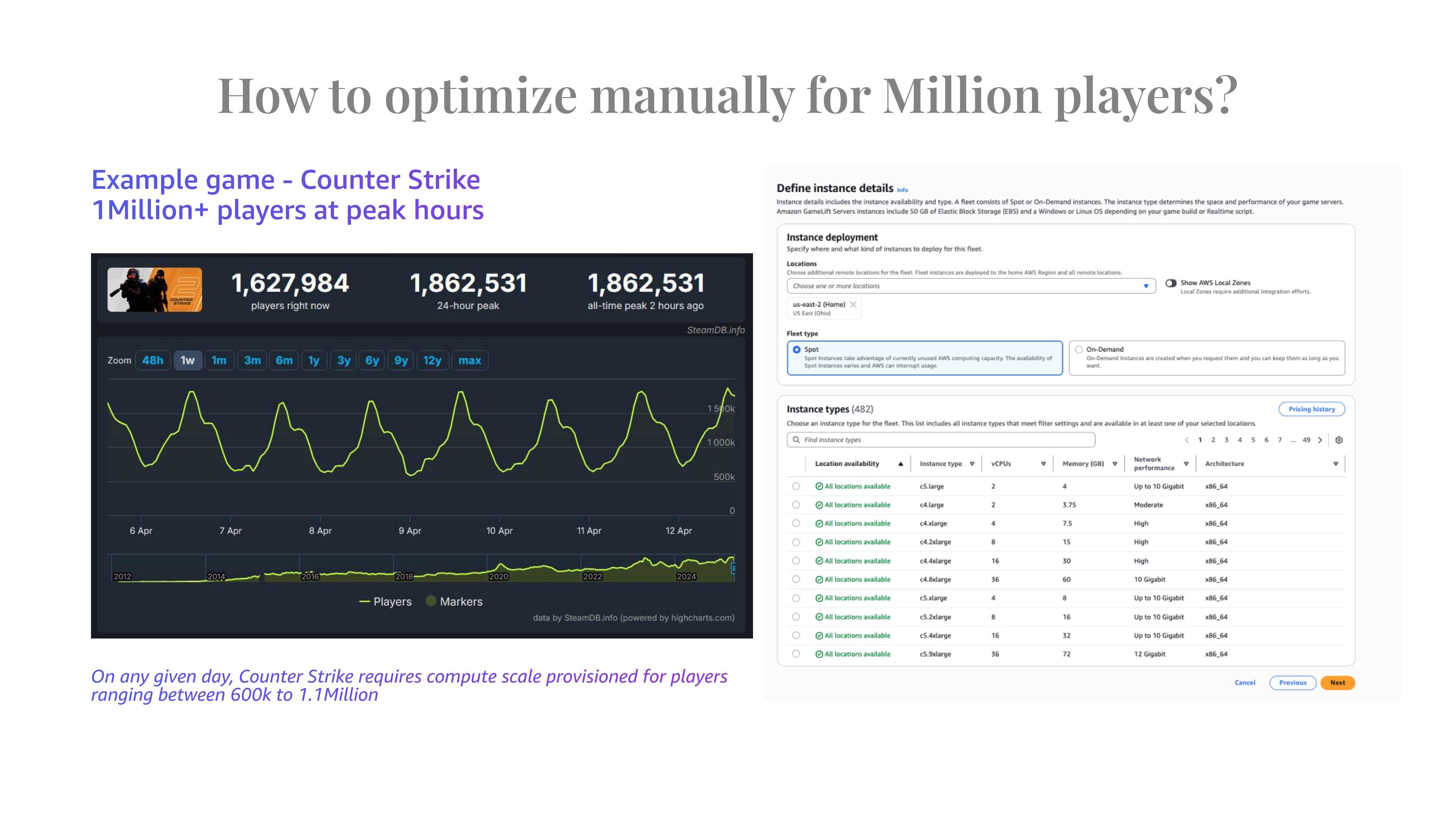
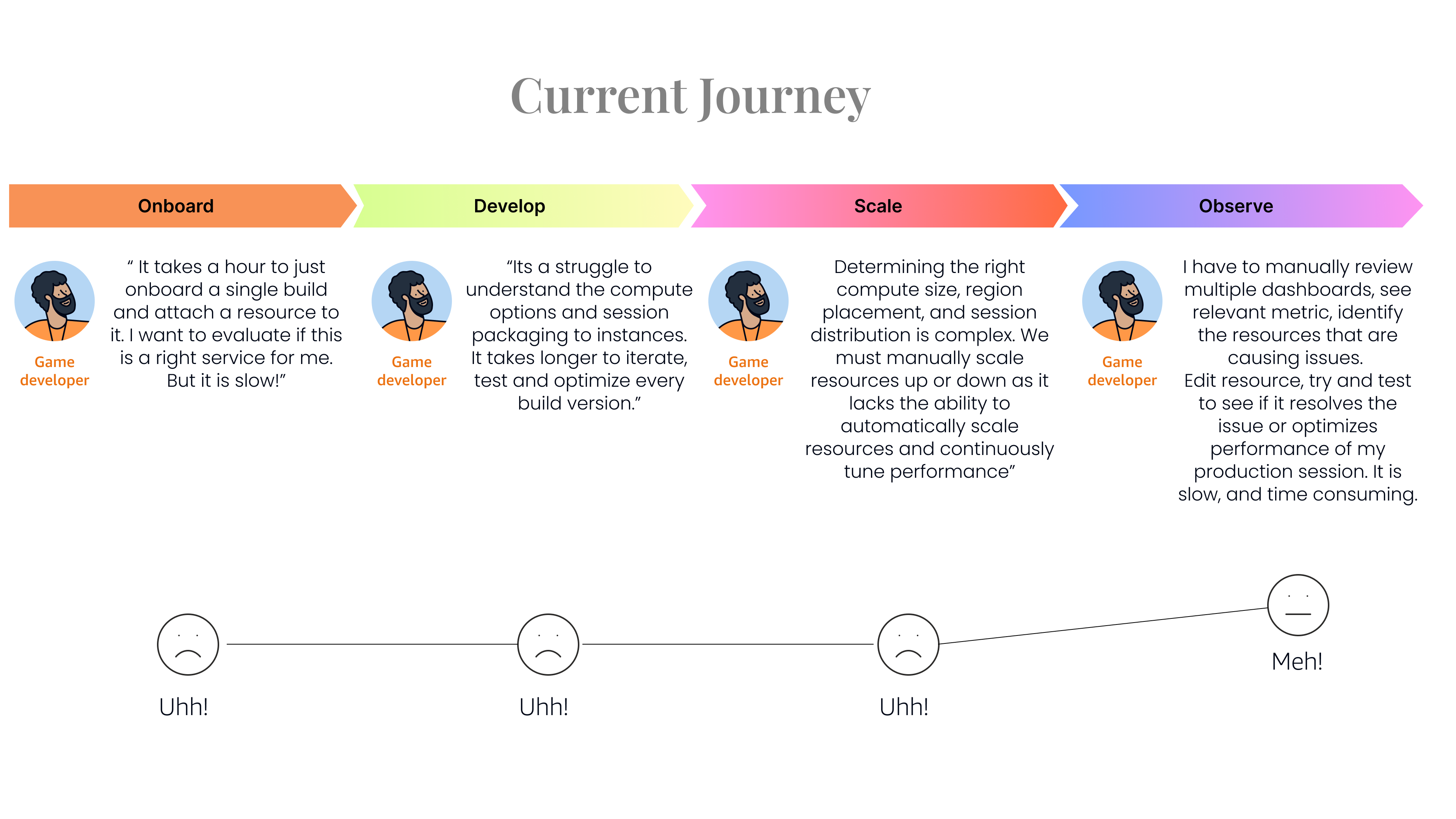
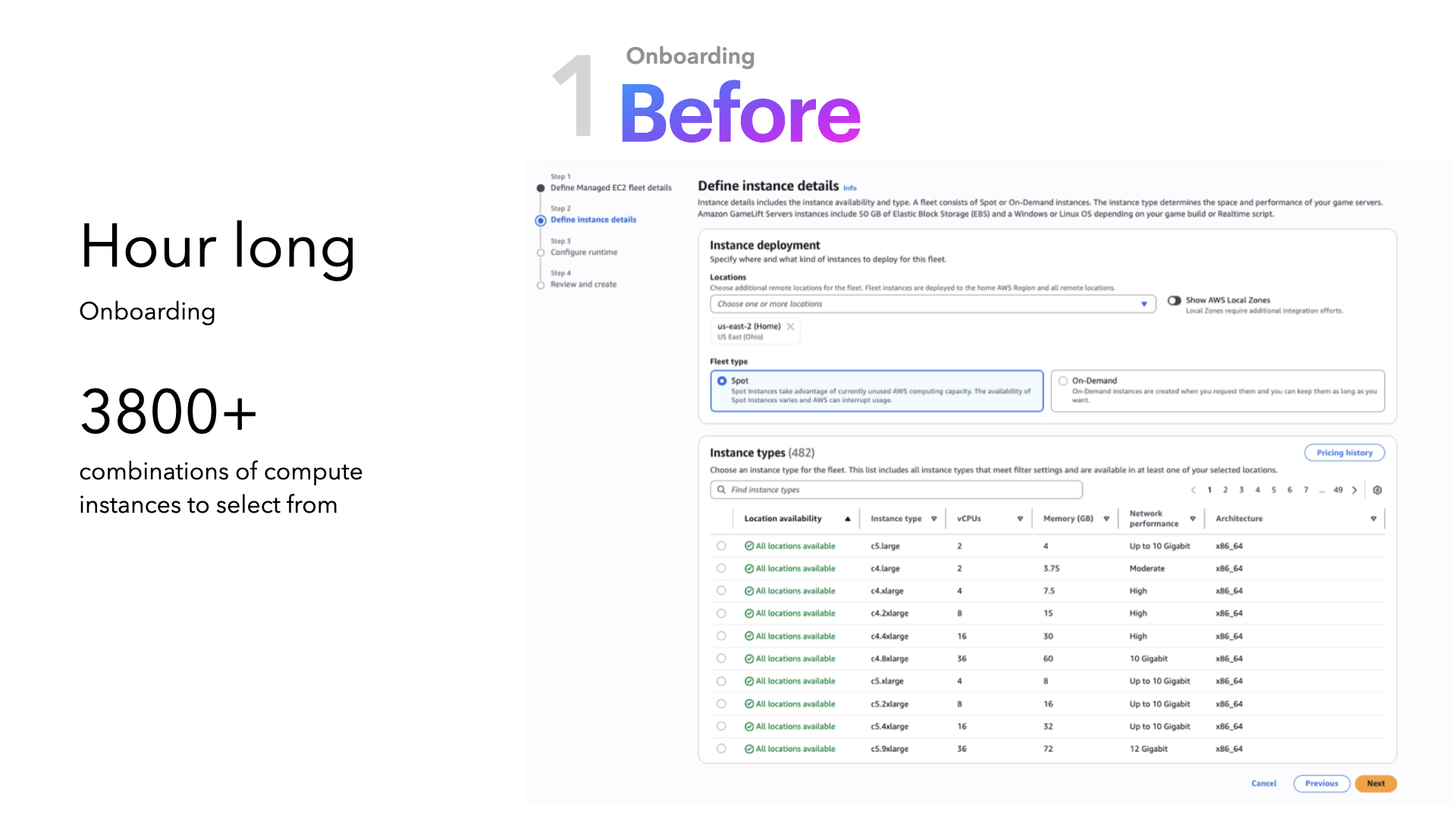
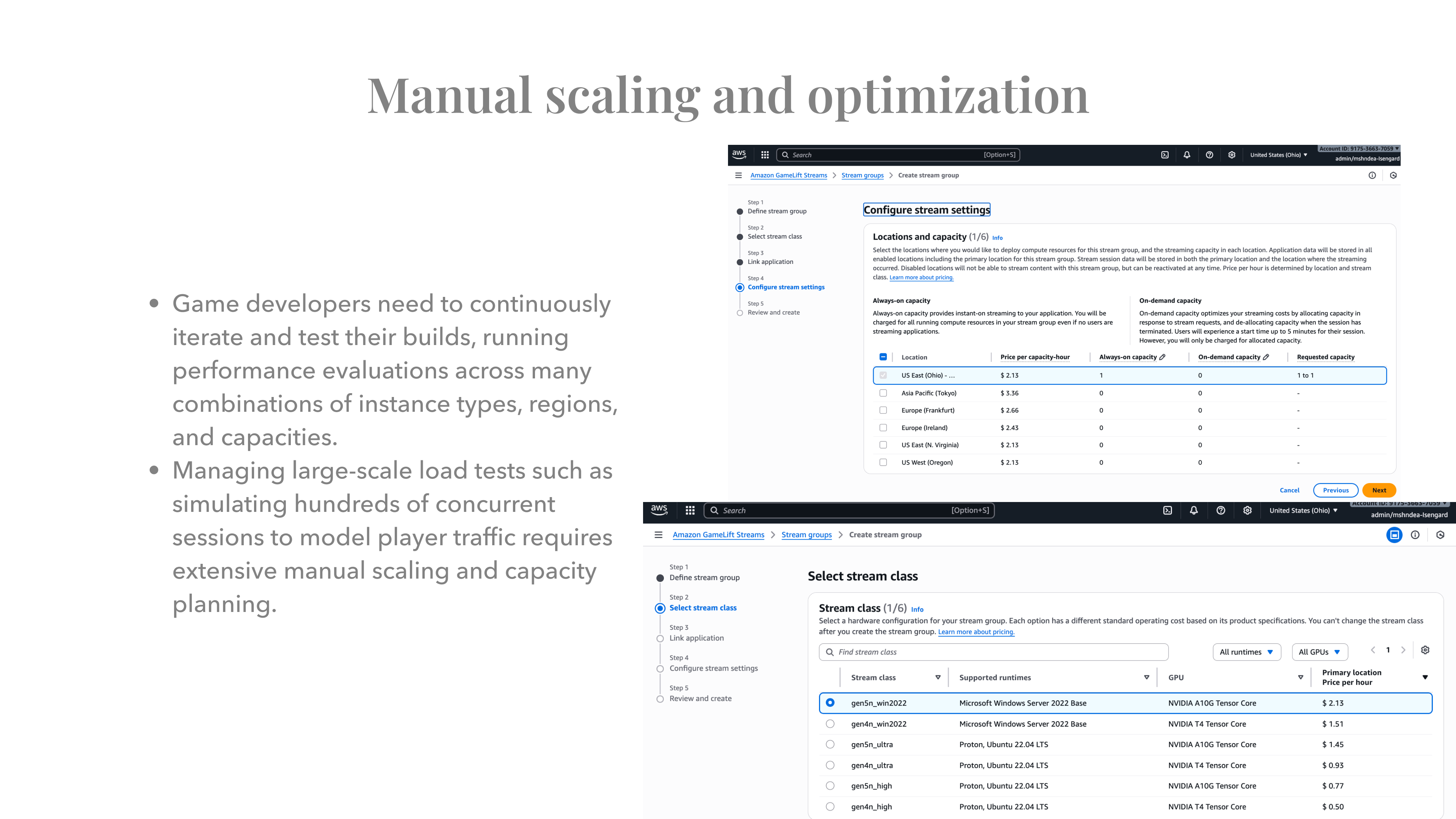
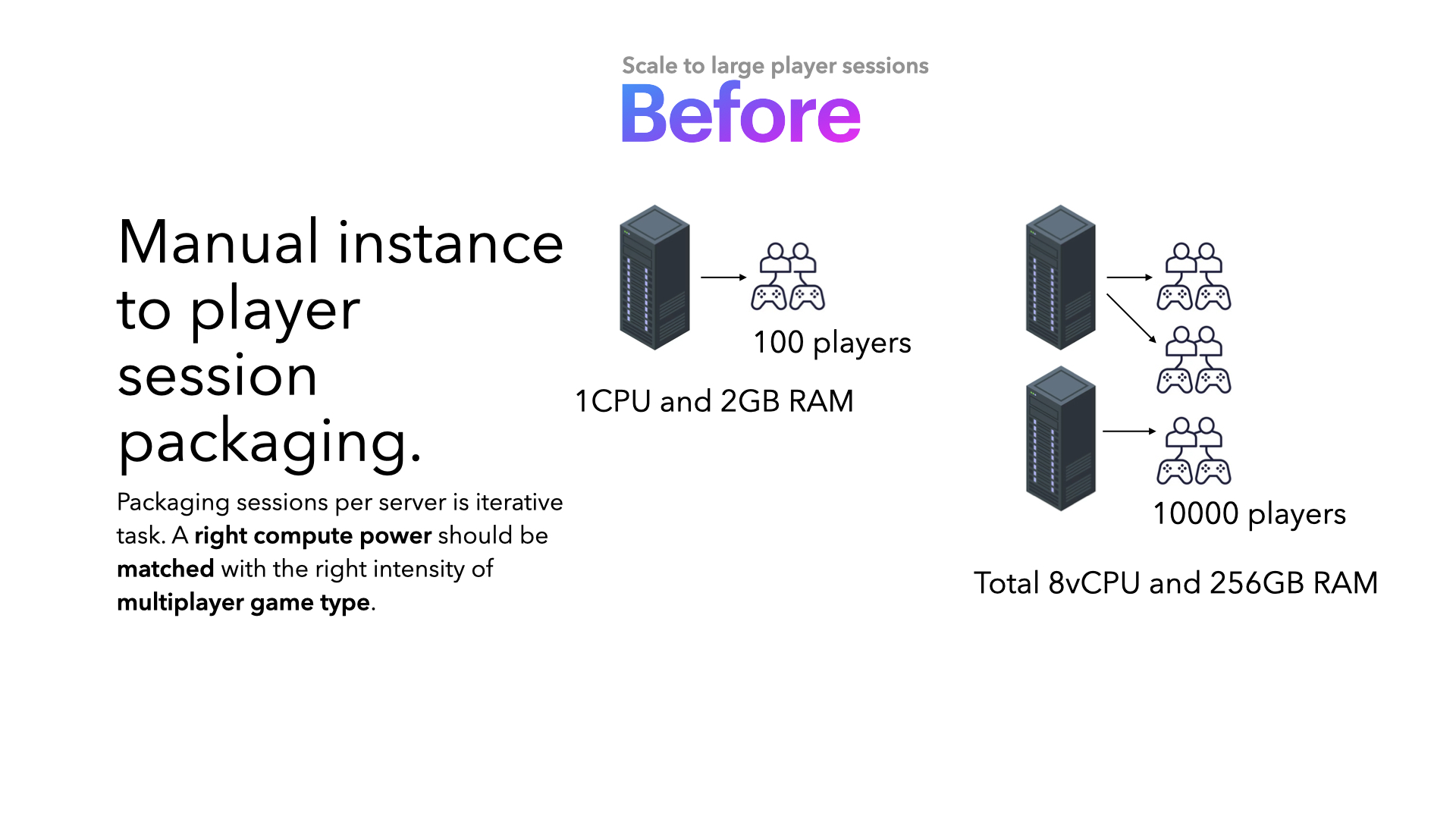
Manual infrastructure scaling for live multiplayer games breaks down under pressure. A operator/developer watches dashboards, guesses at capacity needs, does back-of-envelope cost math, and executes changes by hand often too late or too aggressively. Every decision is undocumented, unrepeatable, and unauditable. When traffic spikes from 1,000 to 100,000 concurrent users in minutes, the gap between "I think we should add servers" and "here is the evidence, the cost, the risk, and the rollback plan" is the difference between a smooth launch and a queue-death spiral. The earlier workflow had no reasoning layer between metrics and action. No forecast. No structured recommendation. No policy gate. No simulation. Just a person, a dashboard, and a button. Game developers mental model: They have to orchestrate numerous high value, high stakes decisions in real time. They build up the game anticipating the concurrent player surge on game launch day, iteratively build game that runs seamlessly on cloud by setting up instances that has vRAM and CPUs. Also consider projected players, cost of running instance on cloud to support the #players CCUs, scaling the instances ,optimizing the server performance, improve the latency and enhance player experience.
Simulation agent The digital twin is the load-bearing design decision. Instead of testing against real AWS infrastructure (expensive, slow, non-deterministic), the entire fleet is simulated: an in-memory fleet model with realistic provisioning lead times, a cost model that prices instances per hour, and a trace player that replays golden traffic scenarios — including the 1k-to-100k viral spike on compressed time.The simulator makes the system real, free, deterministic, and demoable. The agent, policy engine, and audit log are all production-shaped code running against simulated infrastructure. The same trace always produces the same conditions, so the evaluation framework actually works.
Impact: Zero AWS bill during development. Every edge case is reproducible on demand. A reviewer can trigger the viral spike in a 90-second demo and watch the full agent loop fire. "This is extremely powerful for our developers to control the performance and approve cost by live tracking, showcasing actual vs planned compute capacity. Our developers will benefit from having an ability that simulates how compute will scale at various player queue and server capacity scenarios" - CTO, Large size game company.
Simulation enhanced
Scale Scenarios
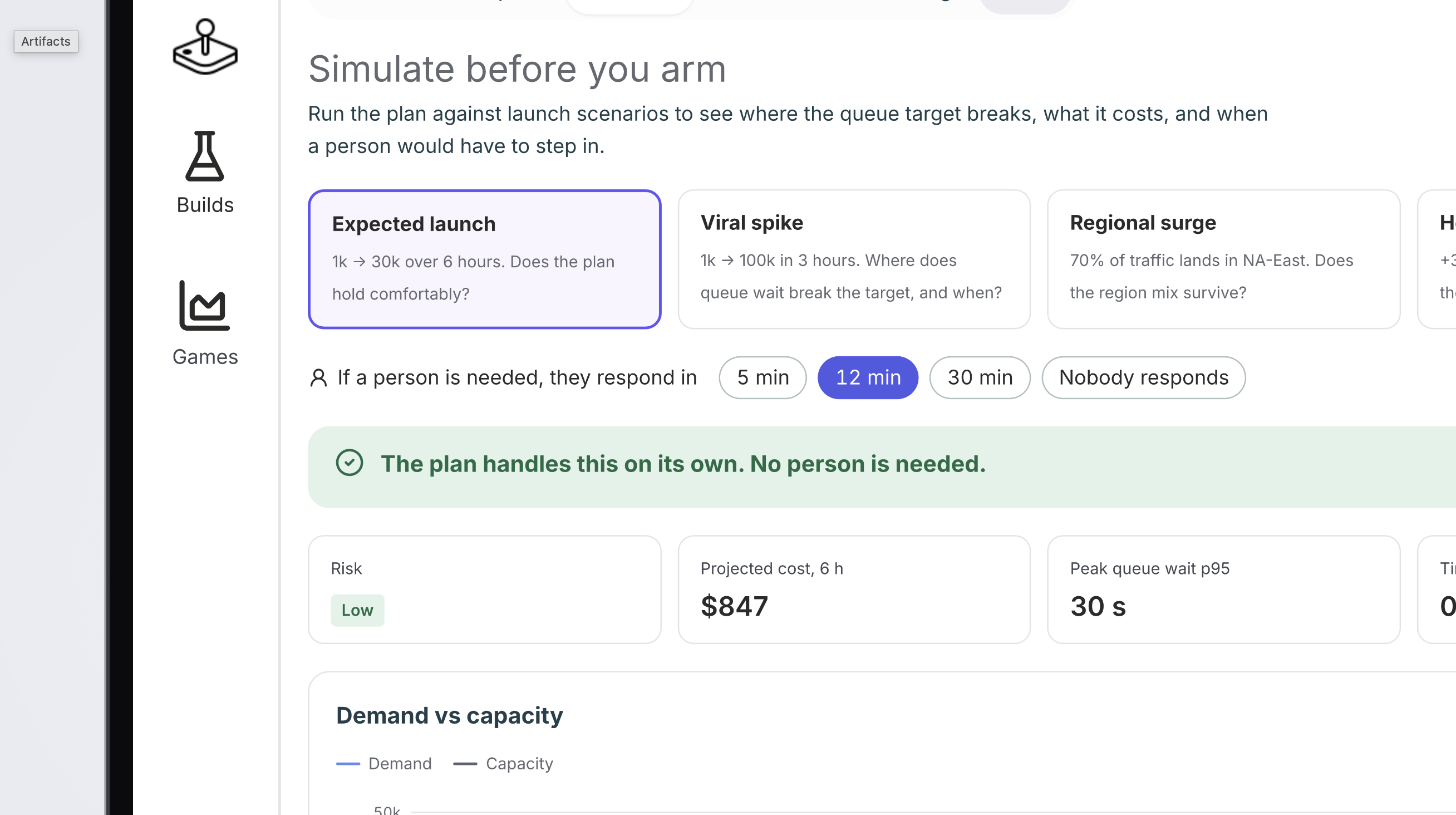
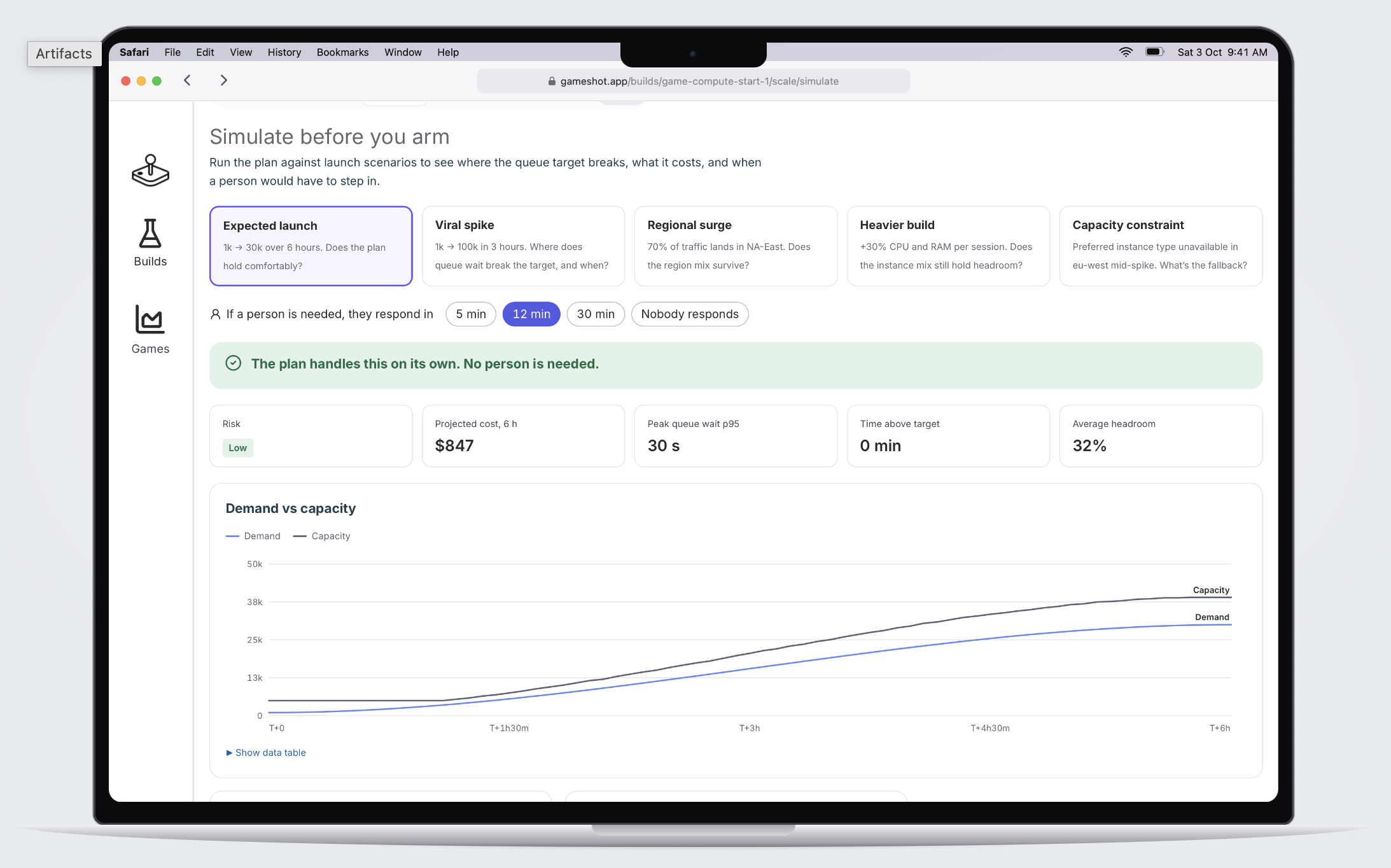
Interface to visualize scenarios: A. 1K > 10K in 6 hours B. 1K -> 100K in 3 hours C. What happens if 70% of traffic lands in NA-East?
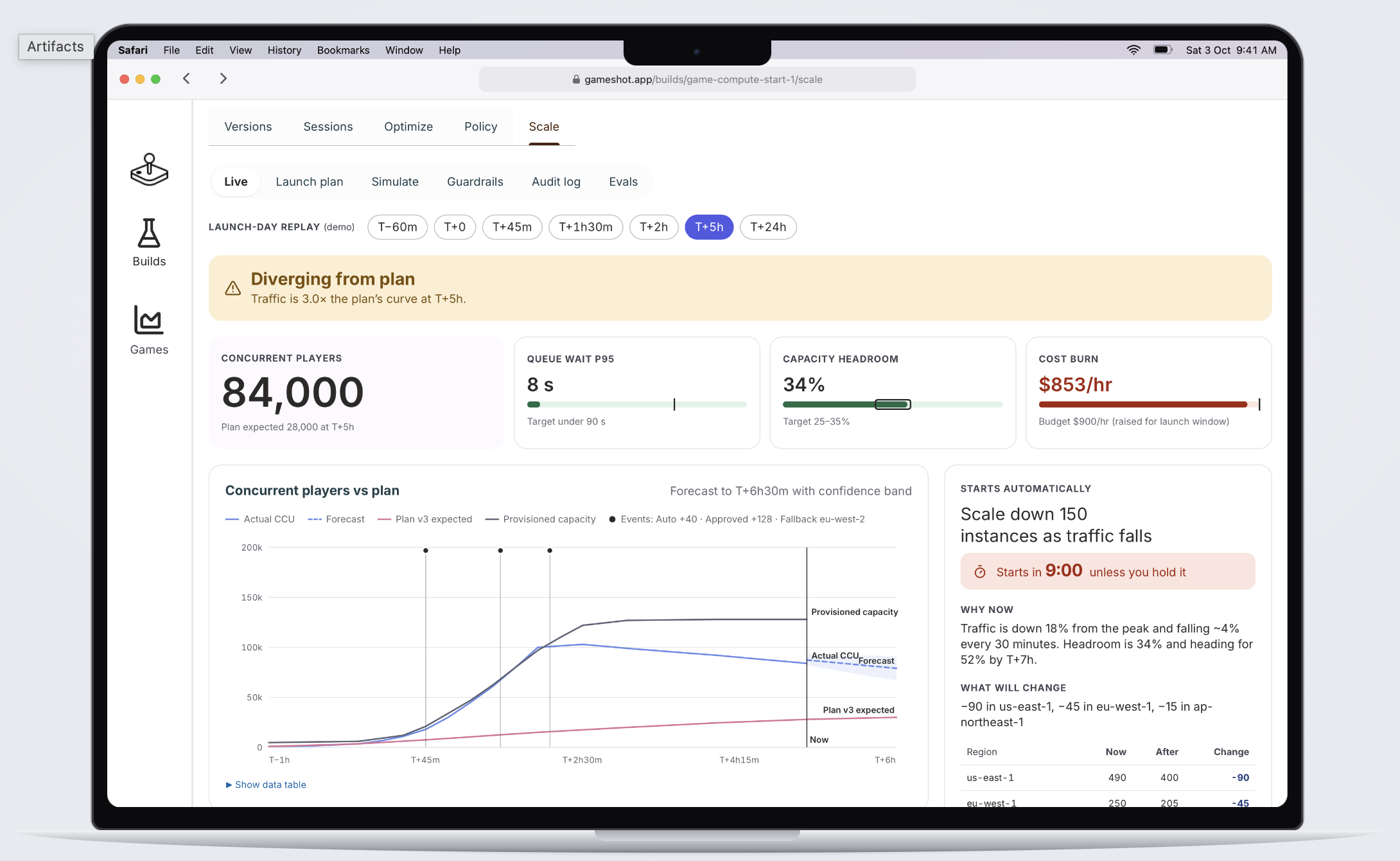
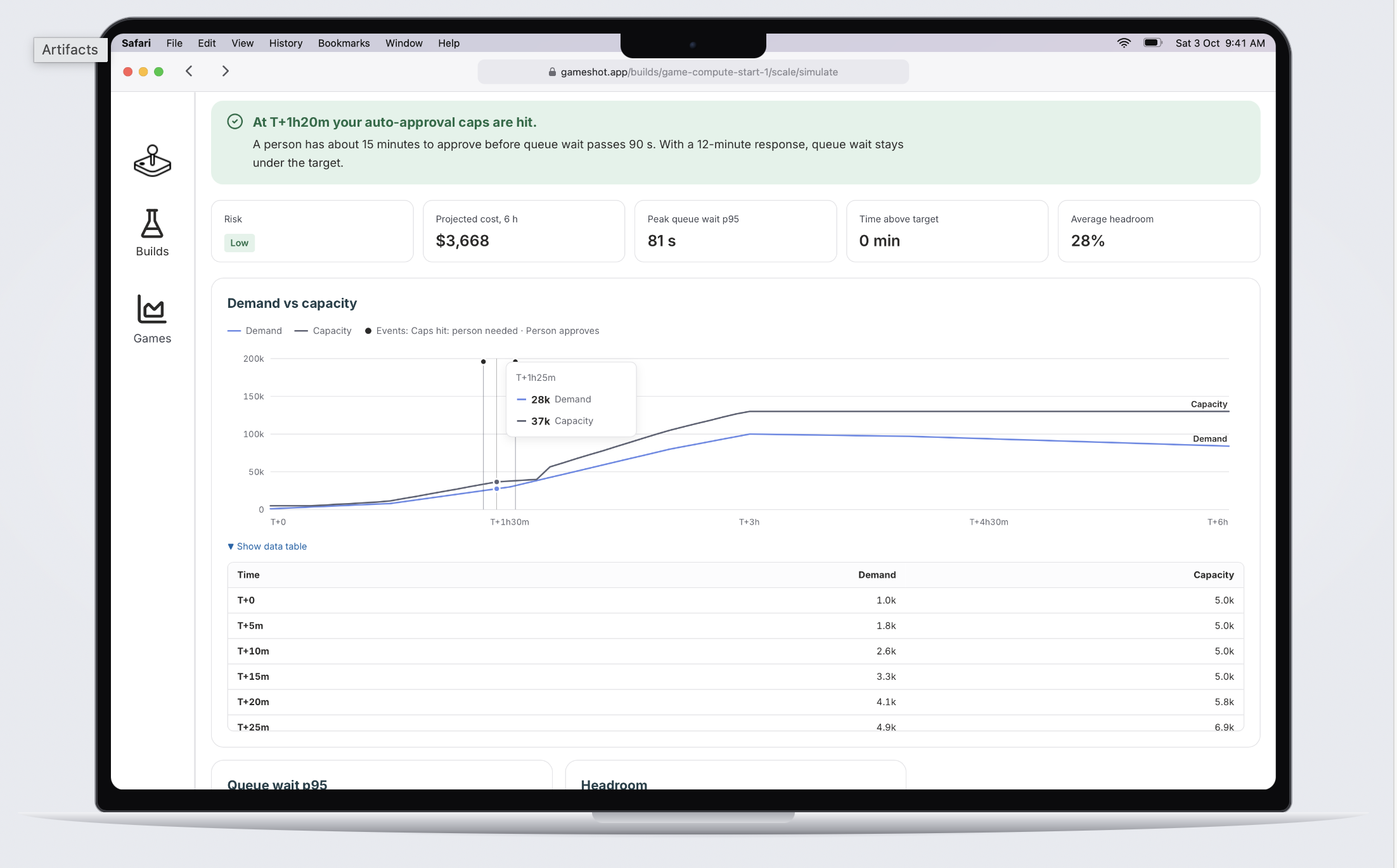
Demand vs capacity
Allow users to visualize Demand vs Capacity projections. Provision of granular demand and capacity timely details.
Prediction on T+XXhrYYmin when the approval caps be hit.
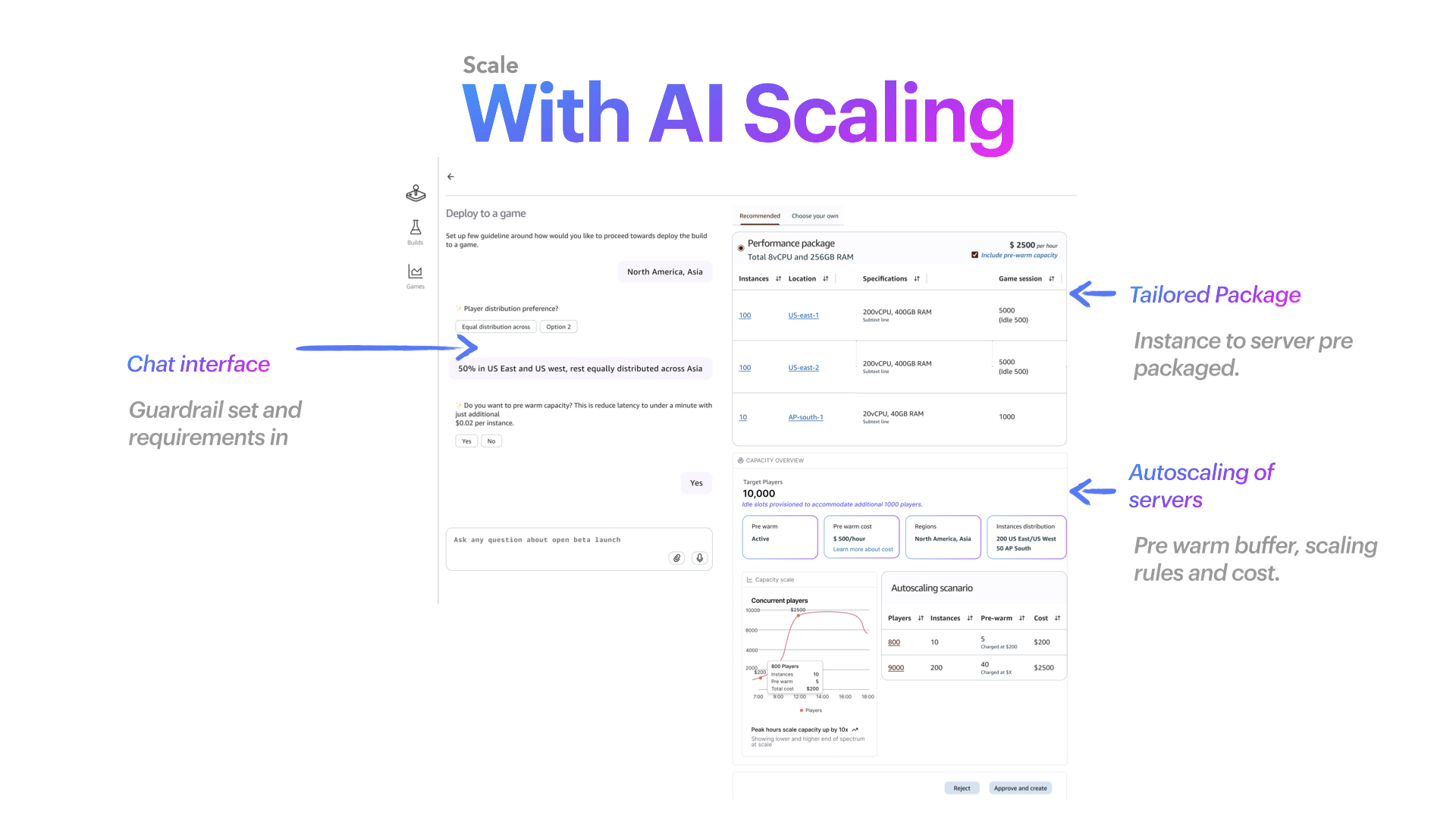
Recommended compute package
AI Chat interface
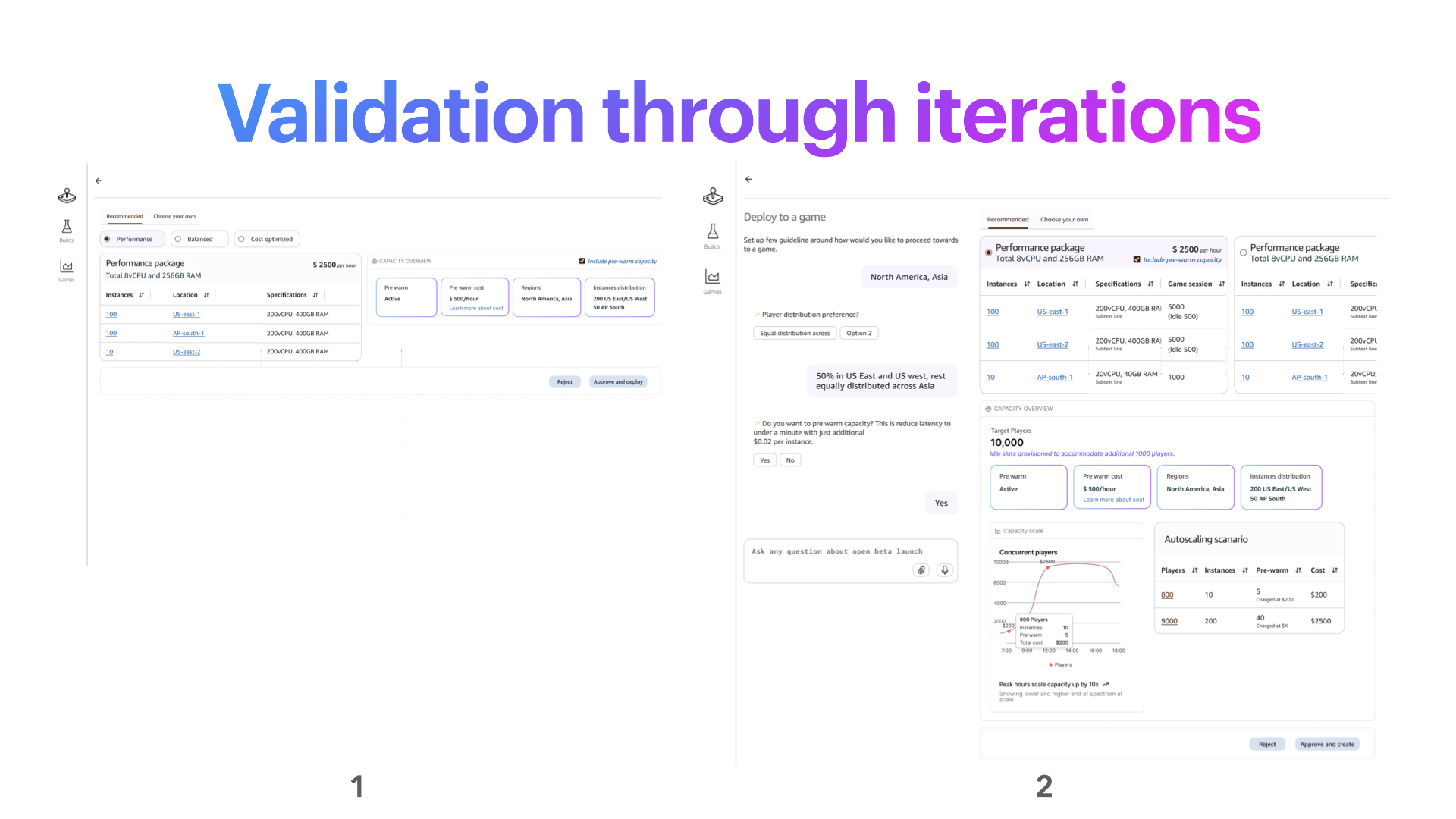
Chat interface where AI agent is responding to the user request to create a game build. User is creating guardrails and constraints. Agent has been trained with the database, use cases, tailored response for service specific capabilities. Agent automates the workflows, create resources ready and waits for human to provide action commands, promots to complete a job. Agent retains and has the context of the information provided from previous sessions to provide a personalized experience.
Simulate first
Game developers need to simulate different scenarios
Game developers typically build up game from internal tests with 1-2 players, moving to beta, open beta, launch day. This requires hundreds of iterations, combinations. Till today developers struggled to simulate how compute would behave, and how the servers will respond in response to simulated surge in concurrent player. This is a gold capability when it comes for enterprises planning to launch games played by 100k players. Without this capability they would have to build their own bespoke solutions, but this new features would same them thousands of dollars.
Optimise enhanced
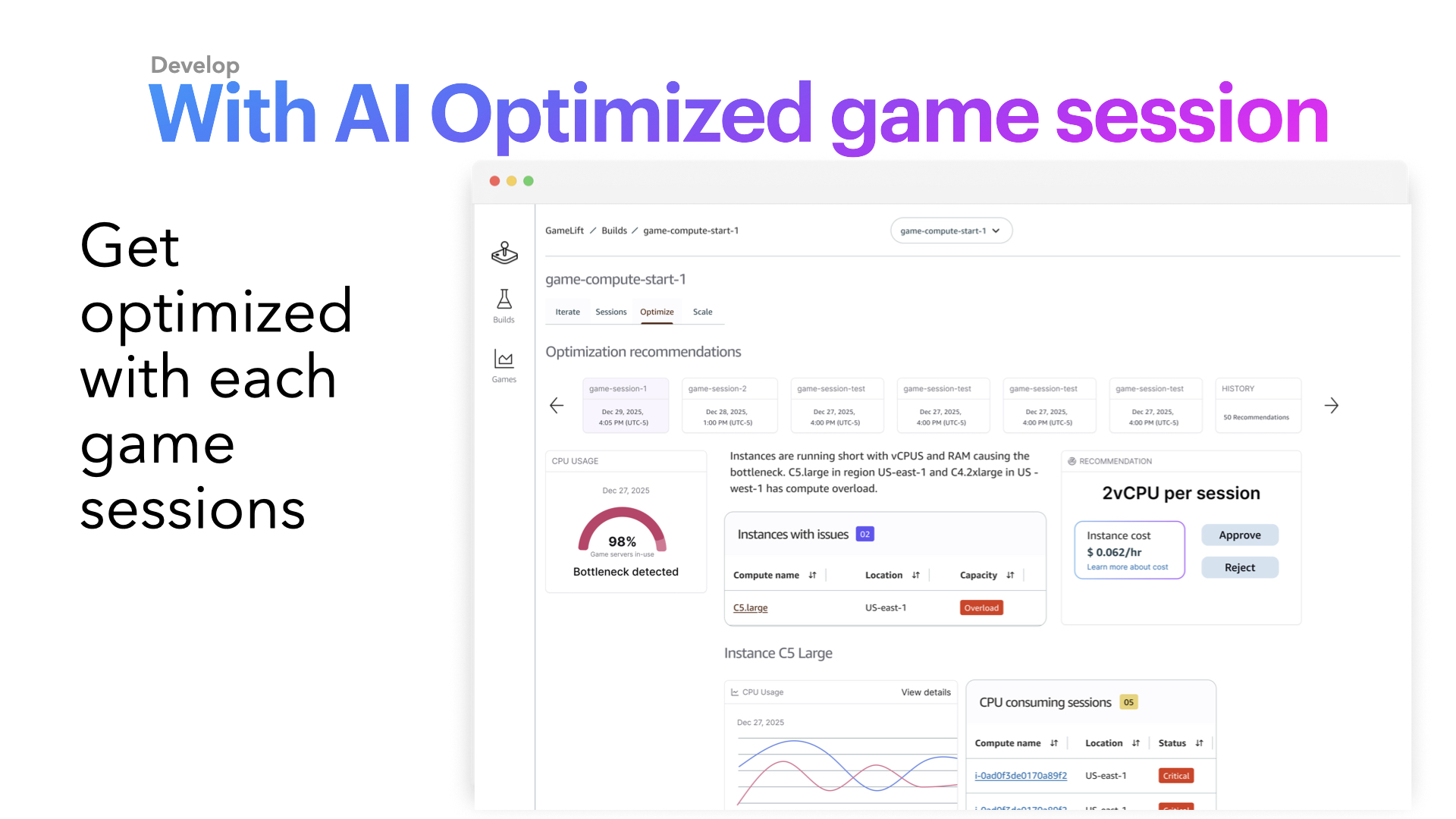
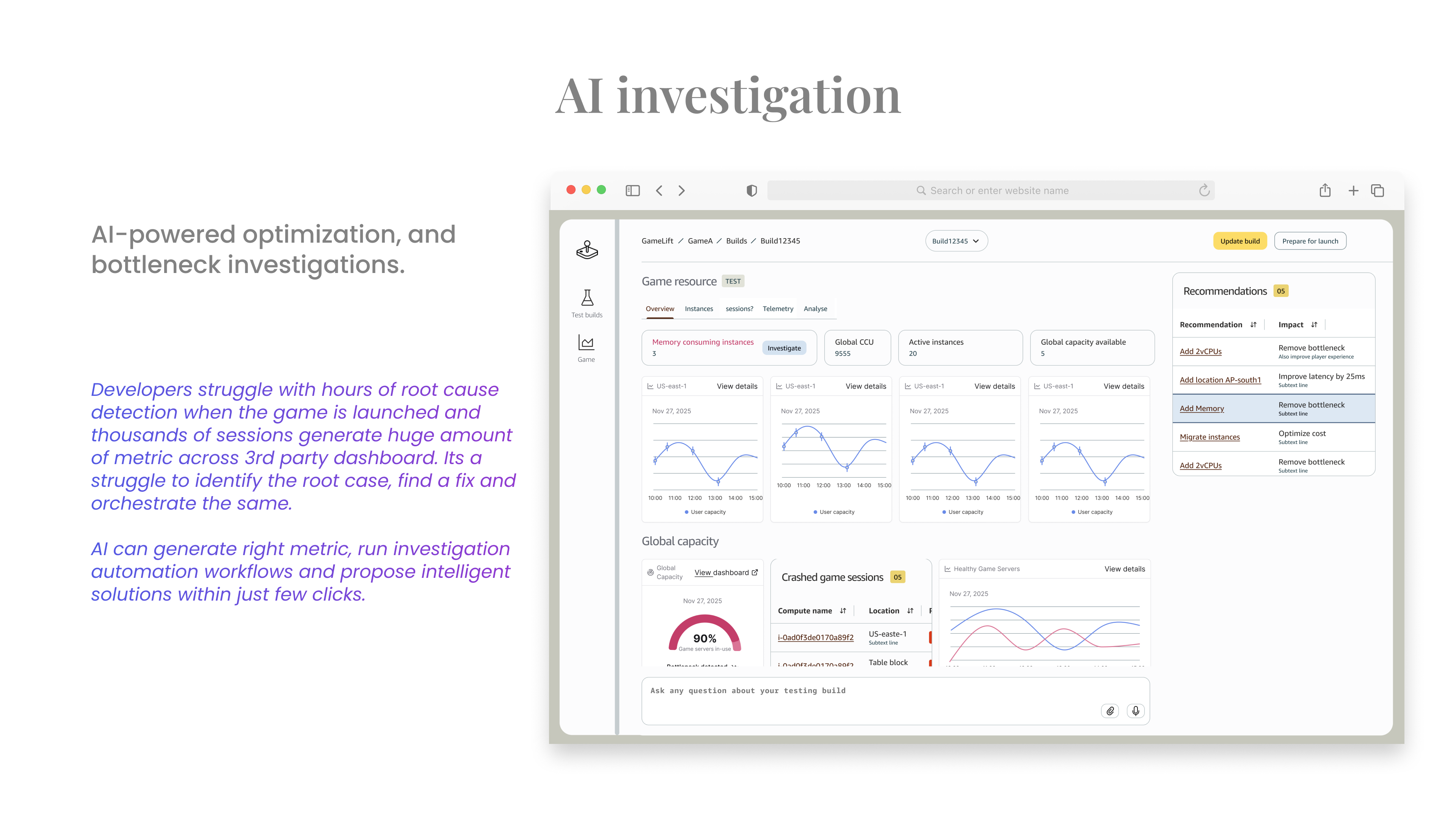
Game developers wanting to optimize each session run on cloud.
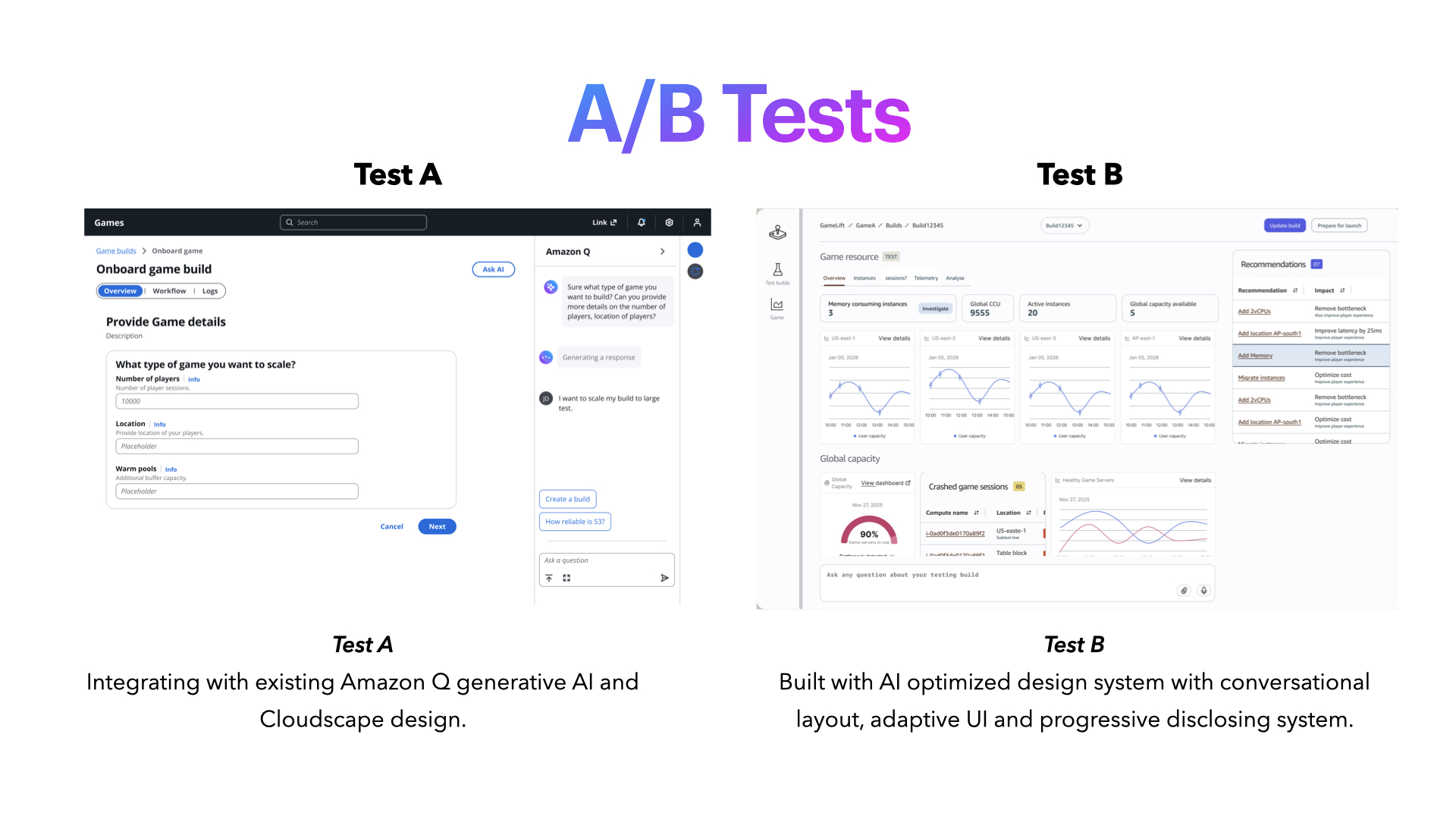
Every time a content or game session is run in cloud, the new capability will show user with the analysis of what is happening at the servers. Would the system able to sustain XX players? What would be the latency expected? What different CPUs provisions developers must do in order to match a predicted demand? Should theyt be optimizing cost is the instances or servers are not being efficiently used? The new capability can show user with algorithms that are capable to surface the root cause, data signals, comparison of recommended instance along with cost. The AI would access the RAG files that has the ruleset, algorithm to analyze on why a RAM and vCPU combination will work best for a given game session. The algorithm has many variables to consider, such as session packing on an instance, game rendering, number of concurrent players, latency, CPU and memory consumption and many more. The user has authority to approve, modify or defer it. The modification data keeps improving the AI agent over time.
Conversation AI Interface
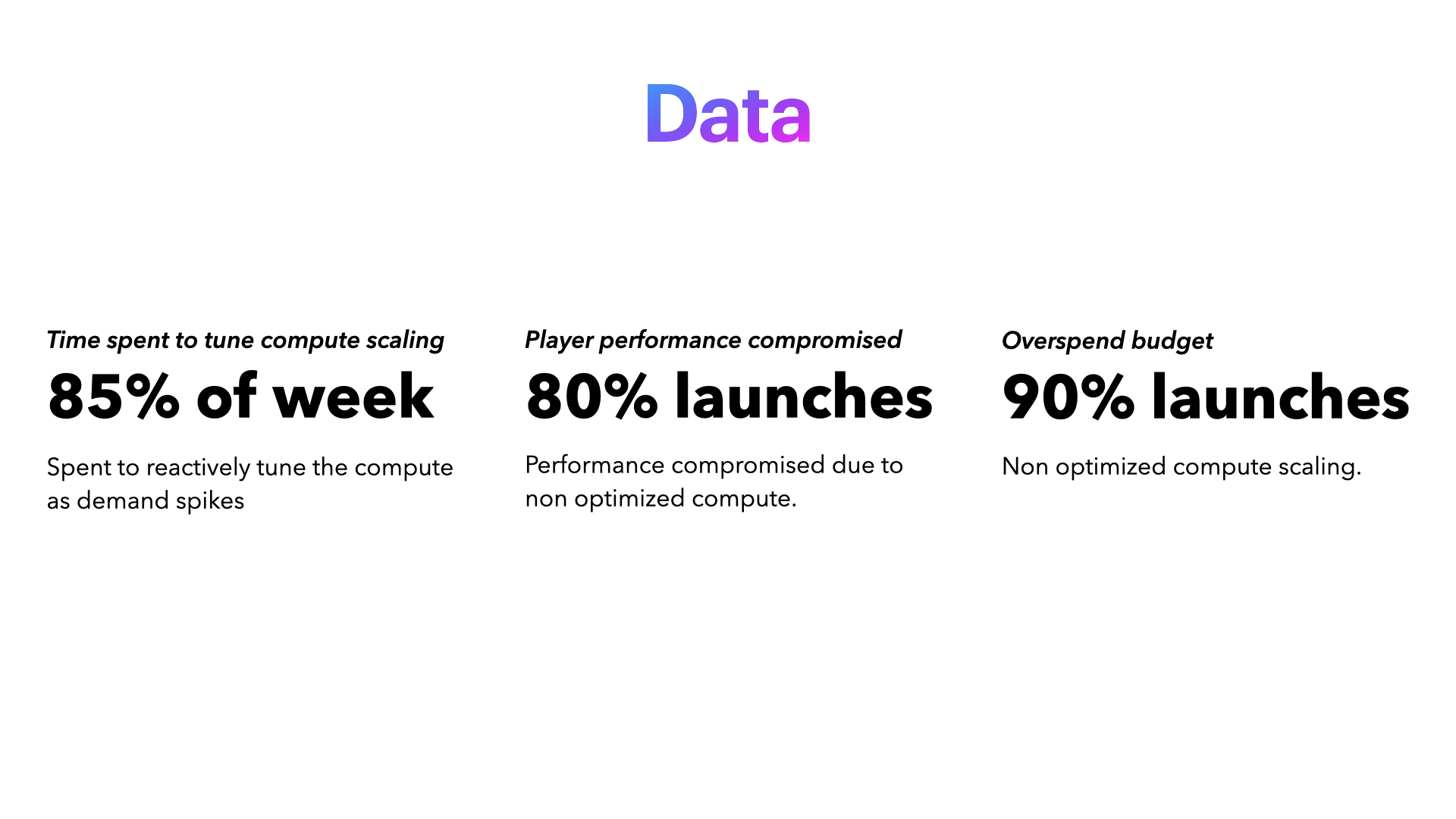
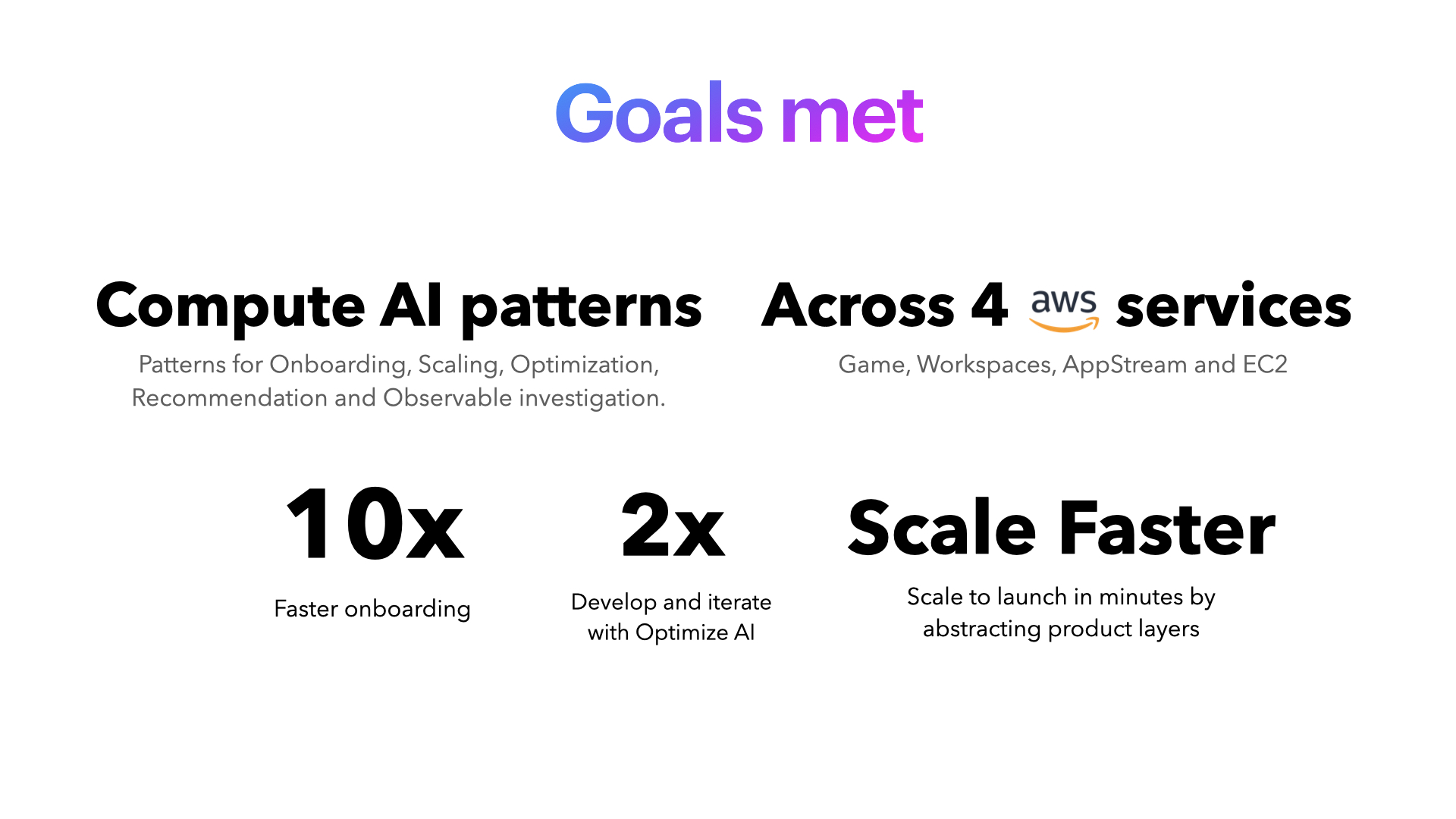
Conversational AI that lets users to provide context, guardrails for their content to be launched. The AI would provision compute resources with smart packages of instances, vCPUs and RAM with Autoscaling features, cost optimization. This feature saved game developers approximately 85% of development work each week.
AI Compute Framework
From session to scale, intelligently
Five pillars that eliminate cloud complexity, surface optimization signals, and put developers back in control — with humans in the loop at every cost-critical decision.
Framework overview
01
Smart defaults
Sandbox in seconds
02
Optimize
Learn every session
03
Scale
Proactive, not reactive
04
Anomaly detection
Threats surface instantly
05
Human in loop
You decide what matters
Five pillars
01
Smart defaults
From zero to sandbox — without the decisions
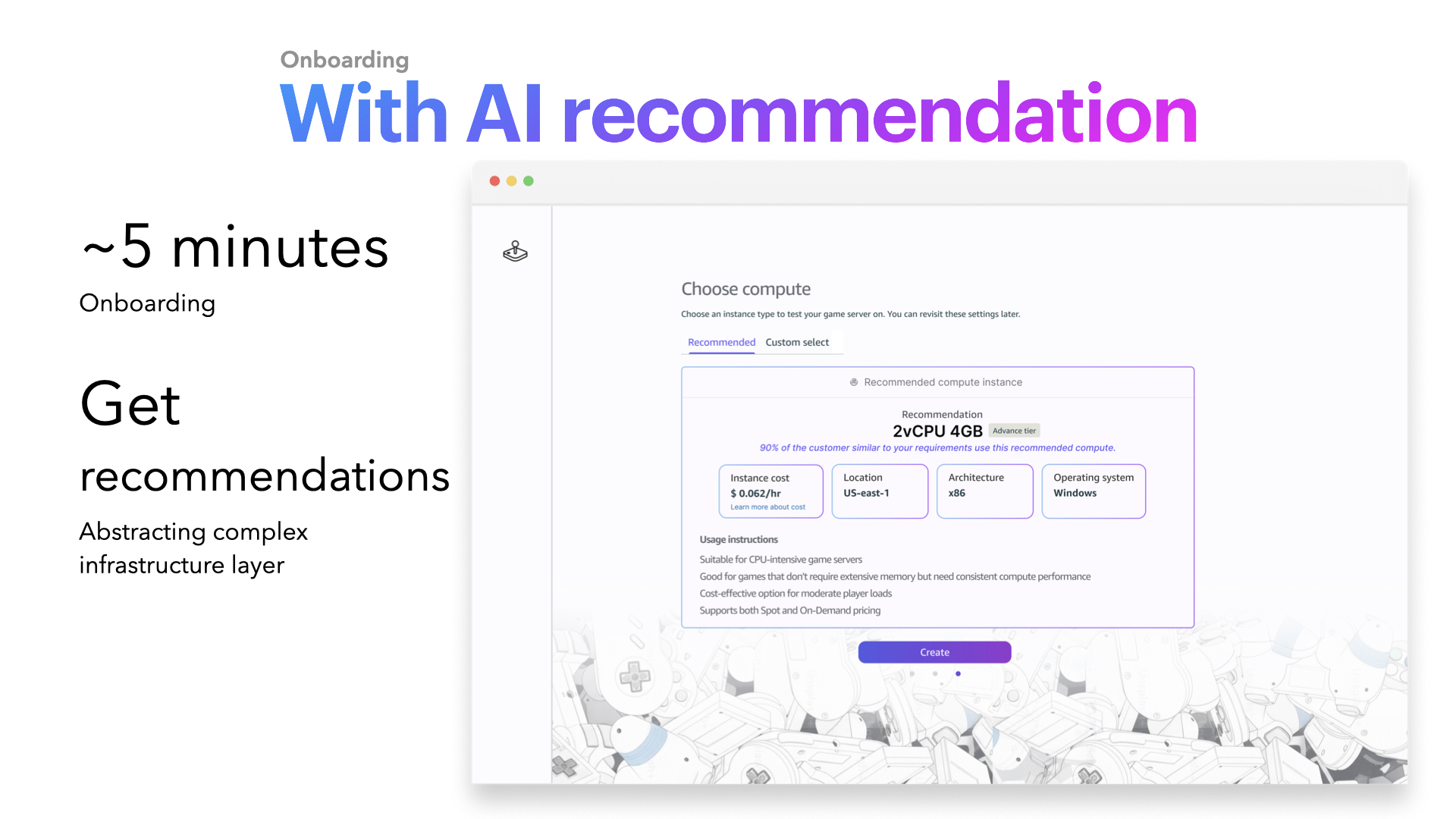
Developers are great at building games, not configuring cloud infrastructure. The agent removes every infrastructure decision — server type, region, instance sizing. Provide a game name and genre, get a live environment.
Auto server selection
Region, instance type, and OS chosen by workload profile — not the developer.
Pre-wired environments
Networking, storage, and security groups configured out of the box.
One-click sandbox
Input: game genre + expected CCU. Output: running environment with sensible baselines.
Override when ready
Defaults are a starting point. Every parameter stays editable.
02
Optimize
Every session makes the next one better
Each cloud run generates telemetry — latency, resource utilisation, player counts, tick rates. The framework turns that into actionable recommendations so each deployment is measurably more efficient than the last.
Memory utilisation
78%+12%
CPU efficiency
63%+8%
Network cost
41%−19%
Idle instance time
14%−31%
03
Scale
Proactive scaling, driven by player-server data
Reactive approaches consistently fail at launch. Player-server data that sat in a dashboard becomes an intelligent scaling signal — the framework proposes action before the bottleneck forms, with pre-launch forecasting and spike prediction built in.
Player telemetry
CCU, session length, matchmaking queue
Server metrics
Tick rate, latency, packet loss
AI
Scaling package
Action + cost delta + confidence
Human approval
Reviewed, modified, or deferred
04
Anomaly detection
The AI sees what the dashboard can't
Long event lists require a trained eye — and time. The anomaly layer correlates runtime signals with security posture, resource performance, and live game state simultaneously, surfacing what matters before it becomes a player-facing incident.
Critical
API key exposure detected in environment variable — eu-west-1 instance group
0 min ago · Security · instance-grp-445
Warning
Non-optimized pathfinding asset consuming 14% excess CPU across 3 game servers
4 min ago · Performance · game-srv-07, 08, 11
Info
2 idle compute instances not serving sessions in 47 min — review for termination
47 min ago · Cost · compute-idle-grp-3
05
Human in loop
AI proposes. You decide.
Every action with a cost implication requires human approval. The agent surfaces the decision, the rationale, and the cost delta — then waits. Scale packages and budget overrides are never applied automatically.
Scaling proposal — Game launch: IronfieldAwaiting approval